


Sofi Gunnstedt
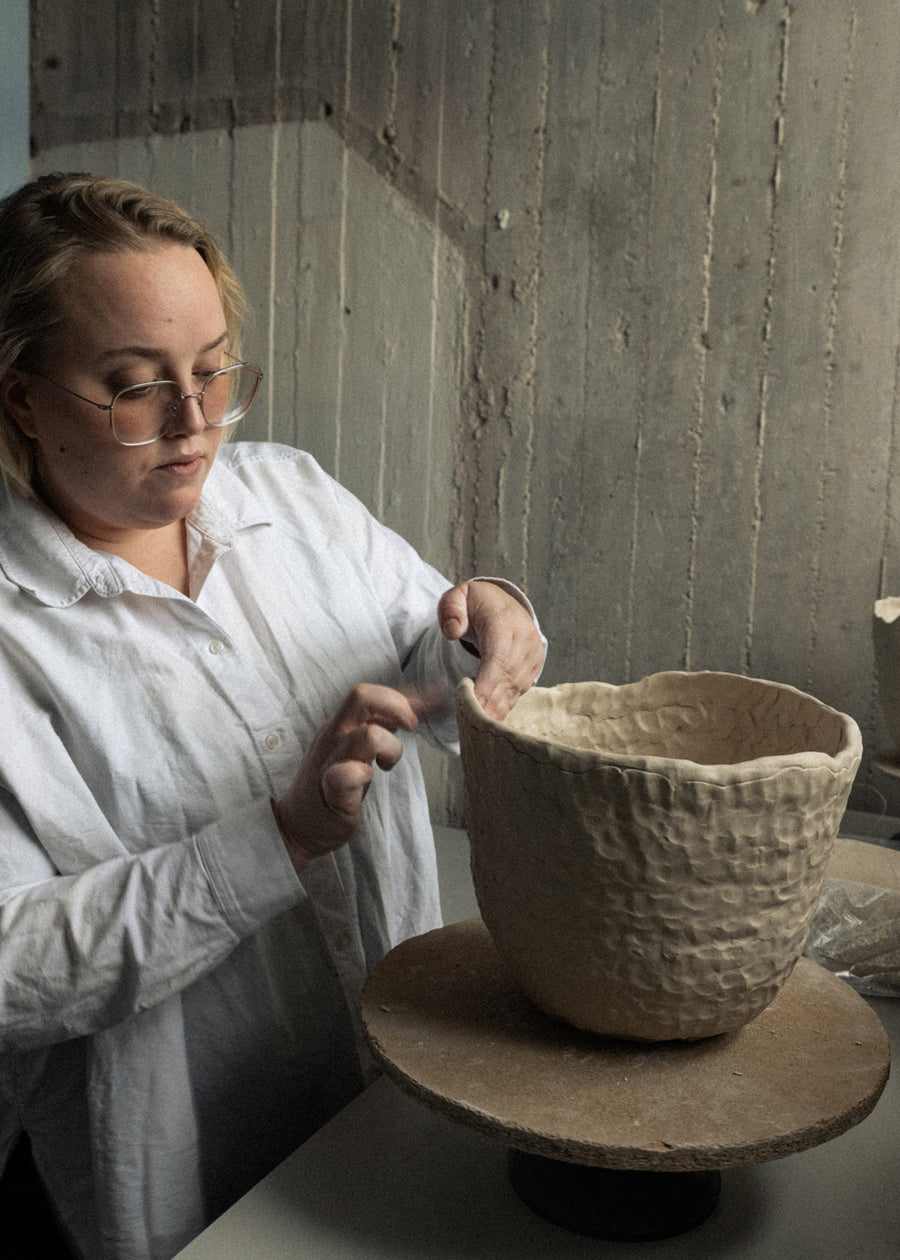
Based in Stockholm, Sweden, Sofi Gunnstedt works from her studio in Gustavsberg, a historic centre for Swedish ceramics where artists and craftspeople continue a long tradition of making. After studying ceramics at Capellagården on the island of Öland, she developed a practice rooted in porcelain while drawing inspiration from both contemporary visual culture and historical decorative arts.
All works by Sofi Gunnstedt
See more of the artist's vision, from striking compositions to intimate details, all ready to live in your space.


About Sofi Gunnstedt
Her work explores the meeting point between past and present, combining references from traditional porcelain craftsmanship with motifs drawn from popular culture and the visual language of the 1990s. Long fascinated by the forms, colours and ornamentation of historical ceramics, she approaches the medium as a way of reinterpreting familiar symbols through a contemporary lens. “I am particularly
interested in the meeting point between historical decorative traditions and modern visual language,” she explains.

Porcelain, Playfulness and Perspective
Porcelain remains at the centre of her practice, valued for both its delicacy and permanence. For many years, she worked almost exclusively in blue and white, inspired by traditional porcelain wares, though recent works have introduced a broader palette and a growing interest in colour.
Her creative process is guided largely by intuition. Ideas are often developed mentally before being realised directly in clay, allowing spontaneity and experimentation to shape the outcome. “When I get an idea, I want to realise it in clay as quickly as possible,” she says. Rather than working towards complete control, she embraces resistance and unexpected turns as an essential part of making, believing that challenges often give a work their character. Recurring motifs include smileys and emoji-like symbols, forms she is drawn to for their simplicity and ambiguity. “They can be almost meaningless symbols, yet they are also used in more serious contexts to reinforce or clarify written language,” she explains. This duality reflects her ongoing interest in how contemporary visual language can coexist with historical craft traditions.
Discover Art By Other Artists
Explore art from a wide range of artists, discover new arrivals, browse bestsellers, and see our curated picks.


Canvas


Bestseller


New Arrival
Curator's Pick


Canvas


Canvas


Canvas


Bestseller


Curator's Pick
Canvas


Bestseller


Curator's Pick


Canvas


Canvas


Bestseller


Bestseller


Bestseller


Canvas


