


Karoline Gabel
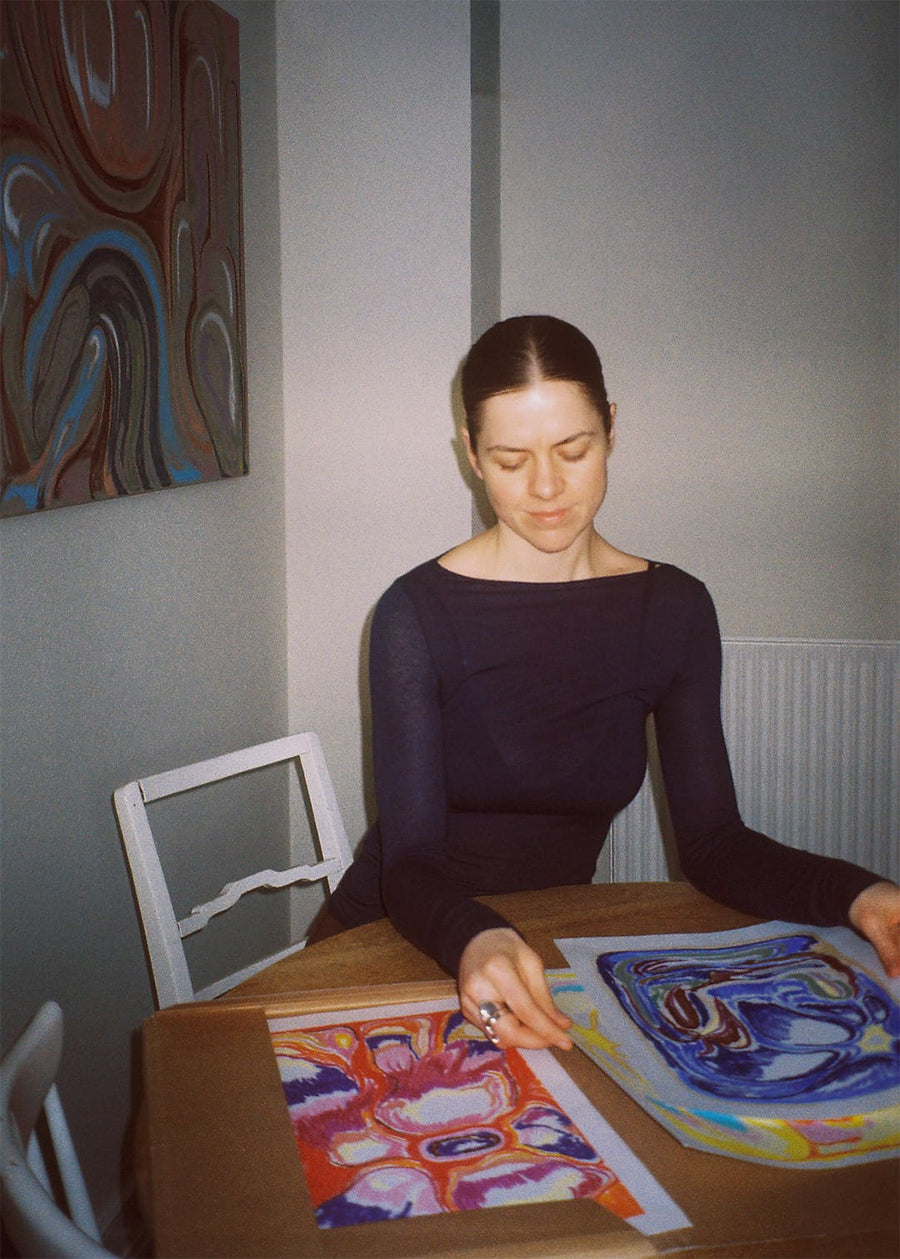
Karoline Gabel grew up in northern Jutland, Denmark, close to the sea, where shifting weather and raw nature shaped an early way of observing the world. What began as drawing reality accurately moved towards images rooted in memory and imagination, before she settled in Copenhagen to study art history and design. Working primarily with oil pastels on paper, linen and fabric, she builds images directly and immediately, often choosing colours first. A warm sun with radiating arms recurs across her fluid landscapes of sea, hills and fields.
All works by Karoline Gabel
See more of the artist's vision, from striking compositions to intimate details, all ready to live in your space.


About Karoline Gabel
Karoline Gabel grew up in the northern part of Jutland, Denmark, close to the sea, where shifting weather and raw nature formed an early influence on her work. Inspired by the colours, patterns and materials from her surroundings, she developed a way of observing that continues to inform her art today. What began as an attempt to draw the world as accurately as possible gradually shifted towards creating her own images, rooted in memory, imagination and lived experience.
“My art is very much inspired by nature. The biggest artist of all time is Mother Nature, after all,” she says. This connection to the natural world continues to inform her art today, both in subject matter and in how she approaches colour and composition. She later moved to Copenhagen to study art history and design, bringing this perspective with her as she developed her practice further.

Colour and Composition
Working primarily with oil pastels across paper, linen and fabric, Karoline builds her images through a direct and immediate process. Ideas often begin during walks or runs, shaped by observations of trees, water and light, and are translated quickly into sketches before developing into finished works.
Colour plays a defining role from the outset. “I often choose the colours for a piece before I start it,” she explains, approaching colour as both structure and atmosphere. Her compositions frequently feature recurring elements such as a warm sun with radiating arms, appearing across landscapes of sea, hills and fields. These motifs, combined with fluid, imagined environments, create scenes that feel both observed and constructed.
Discover Art By Other Artists
Explore art from a wide range of artists, discover new arrivals, browse bestsellers, and see our curated picks.


Canvas


Bestseller


New Arrival
Curator's Pick


Canvas


Canvas


Canvas


Bestseller


Curator's Pick
Canvas


Bestseller


Curator's Pick


New Arrival


Canvas


Canvas


Canvas


Bestseller


Bestseller


Bestseller


Canvas