


Ojuna Njama Petersen
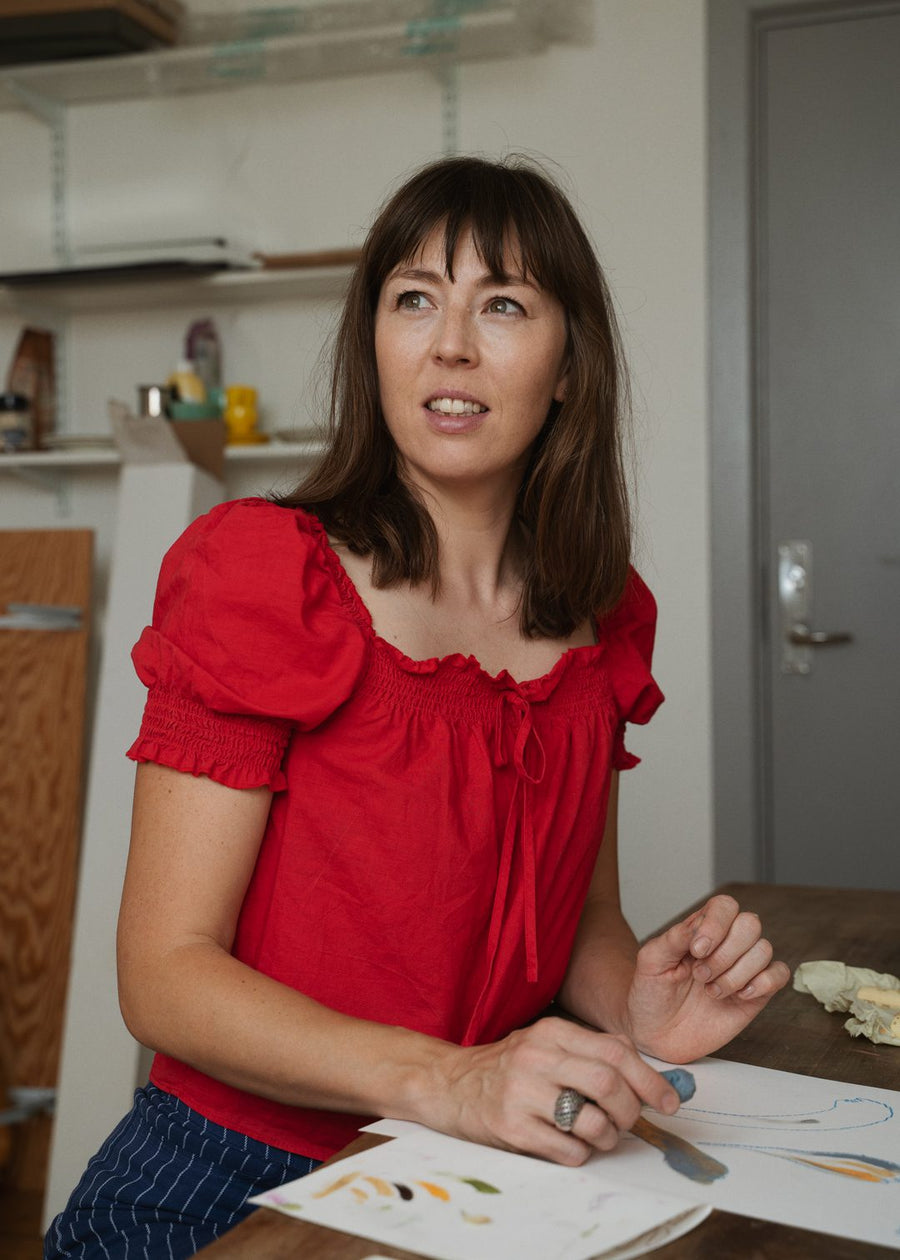
Danish-Mongolian artist Ojuna Njama Petersen grew up in Copenhagen but spent her first years in Greenland, where memories of sunlit snow, fjeld mountains, rocks, moss and lichens still shape her work. Drawn to nature amid its prevailing changes, she works primarily in oil pastels to compose botanical atmospheres, frequently depicting flowers. Rather than dismiss the motif as cliché or merely decorative, she embraces flowers and other feminine subjects with curiosity, free of shame.
All works by Ojuna Njama Petersen
See more of the artist's vision, from striking compositions to intimate details, all ready to live in your space.


Curator's Pick


About Ojuna Njama Petersen
“Like many others at the moment, I am drawn by nature. I think it is inevitable to concern ourselves with nature as it is under such prevailing changes,” says the Danish-Mongolian multicultural artist Ojuna Njama Petersen.
Ojuna grew up in Copenhagen, but spend her first years in Greenland, where the common language between her parents was Czech as they met in Prague. Although Ojuna has lived the longest in Denmark, these early memories from her childhood in Greenland lie deep within her. “I remember the rays of the sun on the bright white snow. The fjeld mountains, the rocks, moss and evergreen lichens.”
The love and fascination of nature also present itself in Ojuna’s free time. She and her family enjoy spending the weekends at their family cottage in Sweden. They will go to Helgasjön during the day to bathe and play and end the day by lighting a bonfire and watching the sun go down behind the barn. “I might even have a small moment to myself to read in a book,” she says.

The flower motif
Created by using primarily oil pastels, Ojuna has composed a creative atmosphere of botanical elements. And she often finds herself depicting some sort of flowers.
“The flower is of course a historical motif in painting, but it is also a very feminine one. Throughout history you will meet female artists, sitting at home painting flowers,” she says and continues: “Sometimes I am thrown by my own critical thoughts of how the flower motif is cliche or even boring and that it is… non-dangerous and simply decorative. But I am trying instead to embrace the flowers and other feminine motifs without shame, but on the contrary with curiosity.”
Discover Art By Other Artists
Explore art from a wide range of artists, discover new arrivals, browse bestsellers, and see our curated picks.


Canvas


Bestseller


New Arrival
Curator's Pick


Canvas


Canvas


Canvas


Bestseller


Curator's Pick
Canvas


Bestseller


Curator's Pick


New Arrival


Canvas


Canvas


Canvas


Bestseller


Bestseller


Bestseller


Canvas